
Can Hearing Aids Help Tinnitus?
January 24, 2025
Living with tinnitus is mentally taxing and can affect overall quality of life. And while there is no cure for tinnitus, hearing aids have been proven to significantly relieve tinnitus symptoms.
Hearing aids work to alleviate tinnitus symptoms by amplifying external sounds into the ear to improve hearing, and in turn, mask the tinnitus sounds. Tinnitus refers to the ringing or buzzing sounds that are heard internally, and are often worse in silent or quiet environments. As hearing aids amplify the sounds externally, the tinnitus sounds can become much less noticeable.

How Can Hearing Aids Help with Tinnitus?
Reduce Tinnitus Distress
Hearing aids can help reduce the psychological distress that is often experienced by those with tinnitus. The constant ringing, buzzing, or whistling that tinnitus causes can lead to distraction, sleep deprivation, anxiety, depression, and other symptoms that impact and lower quality of life. However hearing aids can make the symptoms of tinnitus much more manageable.
Hearing aids increase background noise, making it easier to hear the sounds external to us. Once the focus is shifted from internal tinnitus sounds to surrounding sounds, the associated feelings of stress, anxiety, and annoyance are drastically reduced.
Elevate Other Sounds to Mask Tinnitus
Hearing aids were invented for people experiencing hearing loss to amplify the sounds around them. Therefore, someone with tinnitus can also benefit from the increased background sounds, as it masks the internal sounds. With technological advancements in recent years, most hearing aids offer specific tinnitus masking features.
Tinnitus masking features proven effective include white noise and nature sound machines. These features, which can also be found as stand alone devices, produce static or environmental sounds, like falling rain or ocean waves. This is effective in masking tinnitus – specifically for sleeping, working, and studying.
While masking tinnitus can provide relief, it’s important to leave some degree of the tinnitus audible so habituation can take place. If hearing aids mask the sound of the tinnitus completely, once turned off the internal sounds will likely come back, sometimes even louder.
Improve Tinnitus Symptoms
The brain has filters that determine what is brought to our attention and what is ignored. These filters ensure that any negative association may not be ignored – as tinnitus is often perceived as negative, the brain does not ignore the sound.
In saying this, studies have shown that auditory input can retrain the brain to focus on external sounds. In turn, the brain can decrease automatic negative reactions to internal sounds and reduce sensitivity of the brain to the tinnitus sounds.
A 2022 study by the Ear Science Institute Australia found that consistent hearing aid use in tinnitus patients can effectively reduce symptoms. Patients who used hearing aids every day over 12 months, have experienced beneficial effects including significantly less distress and reduced tinnitus volume.
Correct Hearing Loss
Tinnitus is commonly caused by an underlying hearing loss condition. When someone experiences hearing loss, the brain receives less auditory input which can change how the brain processes sound sensitivity – leading to tinnitus sounds.
Hearing aids have a positive impact on hearing loss and tinnitus simultaneously. As hearing loss reduces external sounds, awareness of internal sounds is increased. This means the sounds amplified by hearing aids activate the auditory nervous system to reduce attention to tinnitus.
Restoring hearing can reduce the prominence of tinnitus. If you do have tinnitus and you are looking at getting hearing aids, you should have your hearing aids fitted (by an audiologist) to both ears with an open ear aid, wide amplification band, and disabled noise reducing controls. Wearing hearing aids should be comfortable and relatively seamless to ensure they are being used consistently to restore hearing.
Can Tinnitus Be Treated?
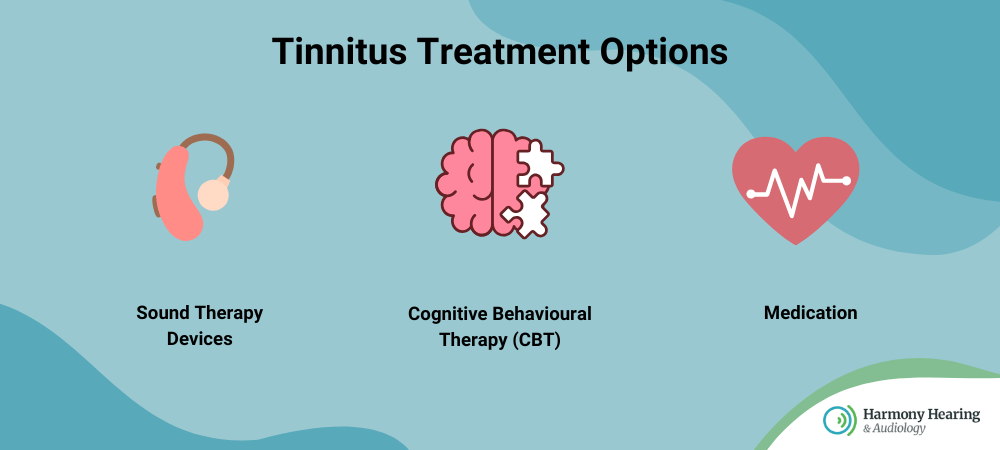
While there is no cure for tinnitus, there are different methods and treatments to reduce tinnitus symptoms to improve quality of life. Tinnitus treatment goes beyond sound therapy devices, like hearing aids; tinnitus management also includes cognitive behavioural therapies (CBT), and in some cases, medication.
In order to treat tinnitus symptoms, an audiologist or doctor must first identify symptoms and underlying conditions, as well as examine the ears, head, and neck. Through hearing exams, movement, and, at times, imaging and lab tests, doctors will determine the best treatment for tinnitus for each person.
Sound therapy devices treat tinnitus by masking the internal sound through acoustic stimulation, hearing aids, or sound generators. This allows the auditory system to adapt and focus on external sounds. While sound therapy is the most common treatment for managing tinnitus, other therapies can be considered to further enhance treatment.
Cognitive behavioural therapy (CBT) is a well-established, evidence based treatment for tinnitus to help develop coping strategies. Methods include in-person group or individual sessions, as well as online programs.
Medication cannot cure tinnitus, however, a doctor may prescribe medication to help relieve underlying symptoms or assist in treating mental health issues like anxiety and depression that often accompany tinnitus. Medication can be beneficial in managing overall quality of life.
Tinnitus Management
Tinnitus interferes with concentration and focus, affecting aspects of daily life, such as work, studies, social interactions, and communication. In addition to sound therapy, and other treatments mentioned above, you can use practical strategies to manage tinnitus symptoms.
Strategies aim to provide lasting relief through decreasing your response to tinnitus through repeated exposure – also known as habituation. Working with an audiologist to create a personalised management plan, you can find the best strategies to implement yourself. Practical strategies may include:
- Breathing techniques: To reduce the anxiety and stress often triggered by tinnitus, practice breathing exercises such as box breathing, the 4-7-8 breathing technique, or alternate nostril breathing.
- Distraction through different activities: Taking your attention away from the tinnitus sound will relieve you from symptoms. This includes listening to music or a podcast while taking a walk, gardening, or grocery shopping.
- Meditation: Practising mindfulness can play a part in retraining your brain to accept tinnitus, which will encourage the habituation process. Taking a 5 minute meditation break every day can provide long-term relief from tinnitus.
- Regular exercise: Working out regularly releases endorphins, which can combat stress often associated with tinnitus.
- Avoiding exposure to loud sounds: Tinnitus is often brought on by constant exposure to loud sounds, therefore, avoiding or wearing earplugs in noisy environments can prevent symptoms worsening.
