
Are Hearing Aids Waterproof?
April 4, 2025
Hearing aids are electronic hearing devices that naturally, can become damaged when exposed to water. As hearing technology continues to advance, there are a wide range of waterproof hearing aids available on the market – but not all devices are waterproof.
Waterproof hearing aids are specifically designed to withstand water and dust, protecting the delicate electrical components from moisture. Waterproof hearing aids can be exposed to heavy rainfall, high humidity levels, and even swimming. In saying this, it does depend on the device; not all waterproof hearing aids are equal – some are only moisture-resistant, while others are designed to be more durable.
To avoid expensive damage to your hearing aids, understand the difference between waterproof and regular hearing aids and ensure your devices are protected from water.
Difference between waterproof or water-resistant
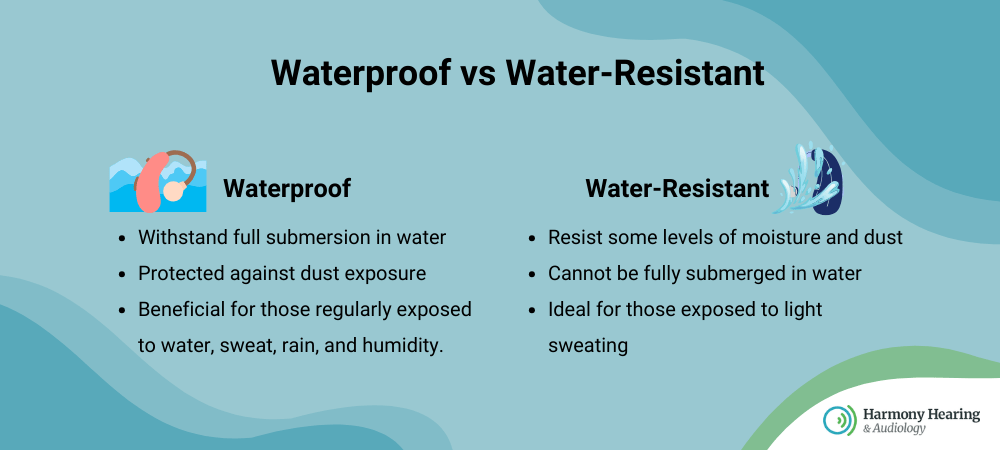
Some hearing aids are completely waterproof, whereas some are water-resistant. Water-resistant hearing aids can resist some levels of moisture and dust, such as light sweating, but are not designed to be fully submerged in water.
Waterproof hearing aids, on the other hand, are engineered to withstand full submersion in water or exposure to dust for extended periods. Waterproof hearing aids (and those with a high water resistance like Oticon hearing aids) can be used by those who are regularly exposed to water, sweat, rain, and humidity.
The difference between waterproof and water-resistant hearing aids is their Ingress Protection (IP) rating. A higher IP rating indicates more resistance and protection against water and dust.
How to determine if your hearing aids are waterproof
If hearing aids have an IP68 rating, the device is considered waterproof. IP68 hearing aid devices are protected against liquid in up to one meter of water for 30 minutes or more.
The IP rating is the international standard used to rate the degree of protection or how sealed electrical enclosures are against dust and moisture. The first digit in the rating (6) refers to dust protection on a scale of one to six. The second digit (8) relates to water resistance on a scale of one to nine. The higher the IP rating, the better the device is protected against water.
While hearing aids with an IP68 rating are the most waterproof devices on the market, they are not indestructible. If submerged below one metre or exposed to water for longer than the rating suggests, the devices can still be damaged. That being said, removing hearing devices before swimming or showering is still recommended to avoid unnecessary damage. For example, the Phonak Lyric hearing aids cannot be used while swimming, but can be worn while showering.
What happens if hearing aids get wet?
If your hearing aids get wet – whether from a sudden downpour, getting splashed by the pool, or you forget to take the devices out before a swim or shower, dry them as soon as possible. Drying hearing aids immediately can prevent water from seeping into the devices and causing more damage.
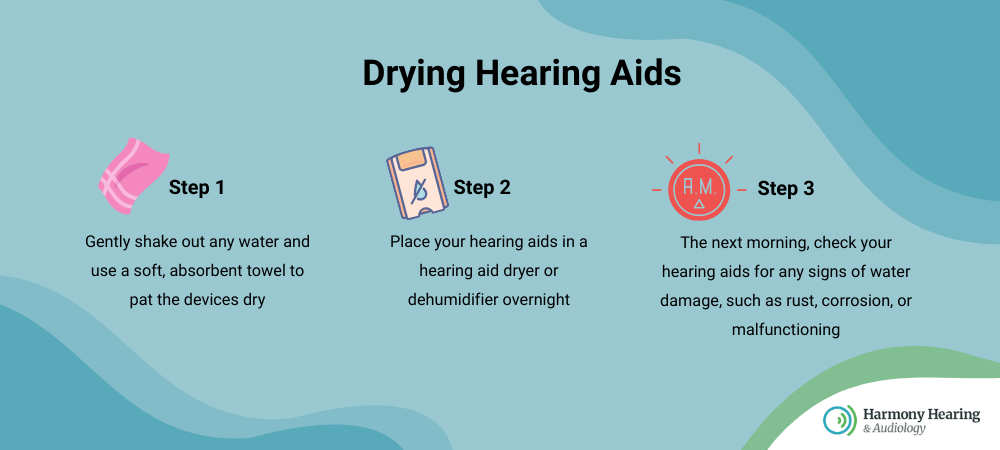
To dry out hearing aids, gently shake out any water and use a soft, absorbent towel to pat the devices dry. Do not rub the hearing aids, as this may push water further into the device. If the hearing aids have a wax guard, remove it and leave it out to dry separately. Completely clean the hearing aid if it has been exposed to unclear water or liquids.
Place your hearing aids in a hearing aid dryer or dehumidifier overnight. Specialised drying devices help to draw out moisture and dry your hearing aids more thoroughly. Alternatively, put the devices in a zip-lock bag filled with uncooked rice overnight. The following day, check your hearing aids for any signs of water damage, such as rust, corrosion, or malfunctioning.
For general good practice, keep your hearing aids in a Dry & Clean Charger every night while you sleep to charge, dry, and clean your devices. Dry & Clean chargers sterilise the hearing aids, ear moulds, or receivers while warm air circulates to draw moisture out of the device – keeping your hearing devices working optimally.
Types of waterproof hearing aids
Waterproof hearing aids are available in different styles and models to suit different needs and preferences. Each type generally offers similar technology and effectiveness as traditional hearing aids, like rechargeable batteries, Bluetooth connectivity, and noise reduction. The only main difference is that waterproof hearing aids have a high IP rating to protect from water and dust.
Popular waterproof hearing aids include:
- Resound Nexia 5 microRIE Rechargeable Hearing Aid
- Starkey Genesis AI 20 RIC RT Hearing Aid
- Phonak Audeo Lumity Life L30 RL Hearing Aid
- Phonak Audeo Infinio I90 R Hearing Aid
- Phonak Slim L90 R Hearing Aid
Who should get waterproof hearing aids?
Waterproof hearing aids can be hugely beneficial for some, but may not be needed for others.
Waterproof hearing aids benefit individuals who live in regions that experience heavy rainfall or are typically high in humidity. Waterproof hearing aids will protect the devices from the moisture in the air. Individuals who lead an active lifestyle and get sweaty regularly will also benefit from waterproof hearing aids to avoid worrying about causing corrosion or the devices malfunctioning from sweat.
That being so, waterproof hearing aids may be redundant for individuals who live in relatively dry climates or aren’t involved in sweat-inducing activities.
